
Applying to Acute Medicine: What You Need to Know
So, you’ve decided to apply to Acute Medicine—excellent choice! If you’re wondering what the specialty involves, how the application process works, and how to make your application shine, you’ve come to the right place.
What is Acute Medicine?
You probably already have a sense of what Acute Medicine entails—but it’s worth revisiting what makes this specialty unique.
Acute Internal Medicine (AIM) is a dynamic, fast-paced specialty focused on the assessment, diagnosis, and management of acutely unwell adults presenting to hospital. Acute physicians play a central role in the “front door” of hospitals, ensuring patients receive safe, timely, and high-quality care from the moment they arrive.
Working in AIM exposes you to a broad spectrum of medical presentations across diverse clinical settings. This isn’t just about running the acute take in an AMU – though we are experts! Many Acute Physicians work in Same Day Emergency Care, enhanced care units and have many other clinical or leadership opportunities. Your job is varied and diverse and so is the training.
In addition to exposure to the above, you will also complete placements in cardiology, respiratory medicine, intensive care, and geriatric medicine.You will become proficient in focus acute medicine ultrasound (FAMUS) and develop a specialist skill. There are many to choose from but may include:
- A procedural skill, e.g., bedside echo
- A clinical specialist interest, e.g., maternal medicine, palliative care, toxicology
- Triple CCT in stroke or intensive care
- Others including medical management and leadership or medical education
For a formal overview, see:
The Application Process
If you’ve previously applied to IMT Stage 1 or other medical specialties, the Acute Medicine application will feel familiar. Applications are submitted via Oriel and scored across the following categories:
- Examinations (MRCP)
- Postgraduate Degrees and Qualifications
- Teaching and training experience
- Quality Improvement (QI) projects
- Presentations and publications
- Commitment to specialty
This year, “Commitment to Specialty” carries even more weight. It accounts for 20 out of 60 marks, or one-third of your total application score, and is evaluated by two independent reviewers. While MRCP, publications, teaching, and QI remain important, showing genuine engagement with Acute Medicine is key!
The Physician Higher Specialist Training Application Scoring can be found here:
Application scoring | PHST Recruitment – Full, comprehensive guidance on applying to HST posts
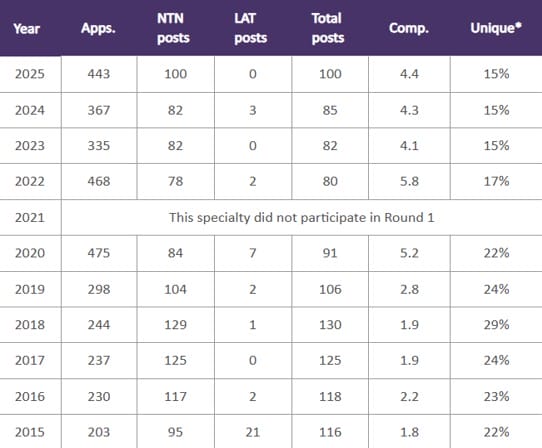
This is especially true as while acute medicine remains competitive, only 15% of applications are ‘unique’ and apply to only acute medicine.
This is the table of applications over the last years, with number of applications, competition ratios and percentage of unique applicants!
Demonstrating Commitment to Specialty
Assessors are looking for evidence that you understand what Acute Medicine involves and that you have actively explored the specialty.
“A good level of commitment to the specialty, undertaking a range of activities or experiences commensurate with the doctor’s stage of training/experience, and a good understanding of the skills and attributes required.”
Ways to demonstrate this include:
- Engage with takeAIM: Attend local events or the annual takeAIM conference
- Join SAM: Become a member of the Society for Acute Medicine, attend conferences, or present posters
- FAMUS accreditation: Complete a focused ultrasound course or begin working toward accreditation
- Acute Medicine-themed QI projects or audits: e.g., SDEC, patient flow, or escalation processes
- Teaching: Organize or deliver teaching sessions for others at the front door
If you are reading this just before the application deadline you may not have time to arrange all of the above but hopefully it sparks some ideas on what is helpful to include in your application and what the application assessors are looking for
Important Dates
This is the timeline for all higher specialty applications
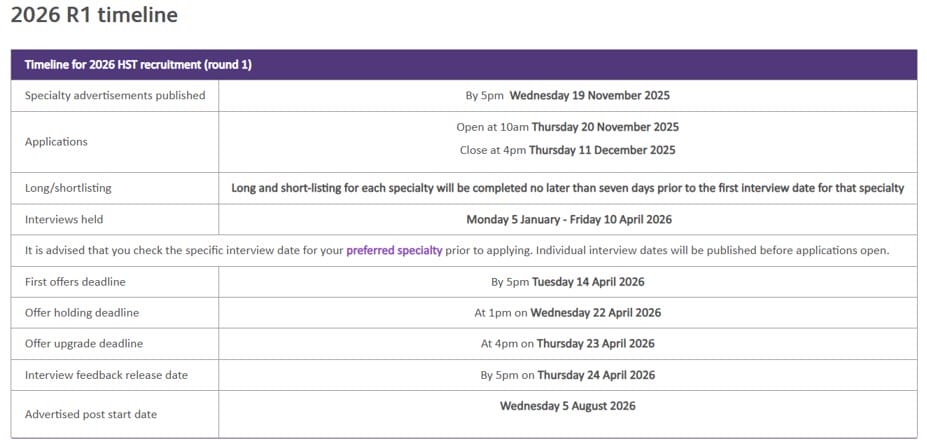
Some specific dates for acute medicine:
- Evidence upload: 15th December 2025 – 5th January 2026
- Interviews: 23rd–27th March 2026
Plan ahead to gather and document your evidence—missing deadlines can seriously affect your score. Full details, scoring criteria, and timelines are available here: PHST Recruitment – Acute Internal Medicine
How to Succeed in Your Application
- Start Early: Gather and upload evidence well in advance
- Reflect Thoughtfully: Describe what you learned from each experience and why it matters
- Link Back to Acute Medicine: Explain how your teaching, QI projects, or research relate to the specialty
- Get Feedback: Ask a mentor or consultant in Acute Medicine to review your portfolio
- Know the Specialty: Be familiar with the curriculum, specialist skills and what the specialty encompasses
Final Thoughts
Acute Medicine is fast-paced, varied, and deeply rewarding. With “Commitment to Specialty” as this year’s key differentiator, it’s crucial to start early, get involved, and let your portfolio tell the story of your enthusiasm and insight.
For guidance or further information, reach out to takeAIM at takeaim@acutemedicine.org.uk.
We will distribute some further information on the rest of the application process – particularly the interview in due course
Good luck—and congratulations on choosing one of the best specialties!