
Thinking of a career in Acute Medicine? Then your in the right place!!
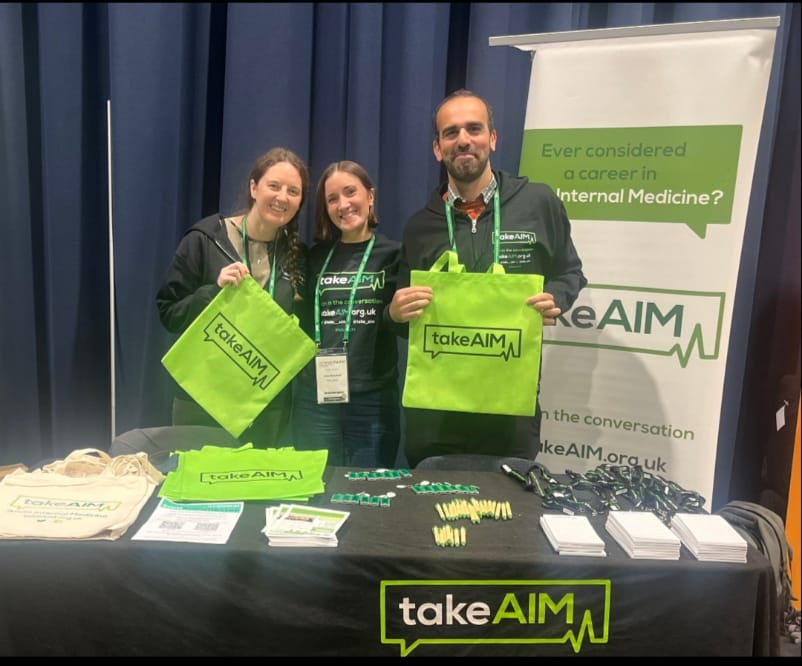
If you enjoy an action packed, dynamic and wide ranging medical speciality which encompasses many diagnostic skills including point of care ultrasound and other hands -on procedures then Acute Medicine is for you!!
Medical Students
It may seem to early to think about career choices within medicine whilst your at medical school, but as you progress you may be building an area of interest that you may wish to pursue. The scientific underpinning of the various human systems is very interesting but clinical placements will give you a better grasp of which speciality is like and whether you are suited to it. There is no pressure to make your mind up whilst at medical school, but we want to give you an idea of one speciality that you might want to choose. Of course this webpage is geared towards Acute Medicine and of course we would love for you to join us but we also want to make sure the speciality is the right one for you. The first thing to know if it is right for you is the definition of what Acute Medicine actually is and how it differs from Emergency Medicine which is something some students have not yet understood.
Acute Medicine is a specialized field within internal medicine focused on the immediate and early management of adult patients presenting with urgent or life-threatening medical conditions. It involves rapid assessment, diagnosis, and stabilization of patients, often in acute medical units (AMUs), where care is provided for the first 48 to 72 hours (although notoriously longer due to hospital bed pressures) of hospital admission. Acute medicine requires strong clinical decision-making skills and collaboration with multidisciplinary teams to ensure optimal patient outcomes. Acute Medics will also run the Medical Ambulatory Area known in most centres nowadays as (Medical) Same Day Emergency Care (SDEC). These patients can from GP, Emergency Departments or Outpatient Clinics and hence Acute Medicine is an important hub for the hospital, and demands liaison with any other specialties including Emergency Care, Intensive Care, Other Medical Specialties, Surgical Specialties and Psychiatry. It also means there is variety in patient cases and also environments that an Acute Medic works in, making it one of most interesting and action packed specialties out there.
Emergency Medicine is a medical specialty focused on the diagnosis and treatment of acutely ill or injured patients who require immediate medical attention. It addresses a wide range of conditions, including life-threatening emergencies such as heart attacks, strokes, and severe trauma, as well as less critical but urgent medical problems. Patients initially seen by the Emergency Department team who need a medical admission will often be referred to Acute Medicine so the two specialties work together a lot, although some patients in some centres are reffered directly to a specific speciality - usually cases like Acute Stroke going to Stroke Team, ST Elevation Myocardial Infarction going to Cardiology.
Acute medicine is the ultimate frontline experience for medical students, offering exposure to a wide range of conditions—from sepsis to heart failure—where rapid decisions save lives. It hones diagnostic skills, sharpens clinical reasoning, and builds confidence in managing complex, high-stakes cases. With a fast-paced, team-driven environment, students gain hands-on experience that’s both challenging and incredibly rewarding. Our home page also has a short video on reasons to do and not do Acute Medicine which will be useful for medical students and foundation doctors.
Whilst at medical school - if you are doing any projects - and you will have to do as part of your curriculum - liaise with your supervisors to try and convert these into posters that can be presented locally, nationally or even internationally if suitable as this will look very impressive and there maybe research summits with prizes. Also you can attempt articles and papers for publication with suitable guidance. If you are involved in extra curricular activities like organising teaching that will also look good and demonstrate initiative and leadership. There are medical elective opportunities in Acute Medicine mainly in London, and of course you will have placement opportunities and you will have a taste of it there. Anything you do in point of care ultrasound will be golden. Obtain evidence for everything you do. All of these show commitment to speciality and that is a big thing nowadays.
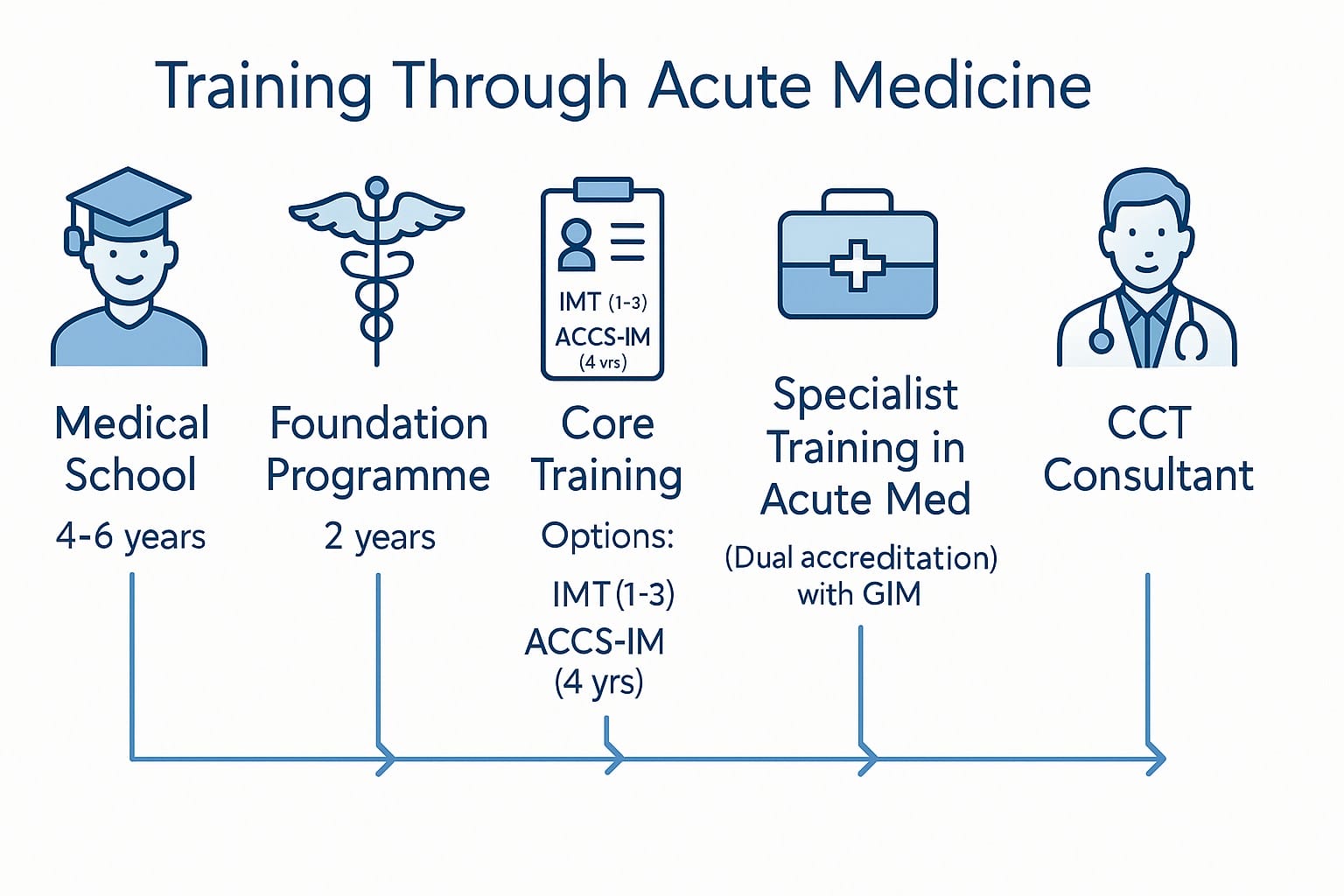
A summary diagram for the training pathway in acute medicine is below - there is an alternative pathway too for those who wish to pursue acute medicine outwith a standard formal training programme. The section for foundation doctors has more on what Acute Medicine involves and what you can do to apply and be successful in your Acute Medicine applications.
Foundation Doctors
The UK's Two Year Foundation Programme will provide you a solid basis to build the rest of your career upon and is designed as to give you a broad range of experience which in itself may well give you an idea of what you want to do. There is variability up and down the country and so there is a range of experience. Some of you may decide to do extra pre training years - often described as Foundation Year (FY) three year (some do FY4 and beyond too). This can be very useful, but to make the most of it you would want to focus on areas which you would consider as this will help you decide on your longer term career choice and will also help you demonstrate "Commitment to Speciality" which is an important concept nowadays where those who are looking at applications will assess how much evidence you have built within the speciality.
Acute medicine is a fast-paced, front-door specialty where patients often arrive undifferentiated, giving you a unique chance to develop broad diagnostic and decision-making skills. Unlike other specialties, you’ll manage everything from sepsis to acute cardiac and respiratory crises, gain hands-on experience with procedures and point-of-care ultrasound (POCUS), and see how rapid assessment drives patient care. To stand out, get involved in quality improvement projects, clinical audits, and acute medicine research, and seek opportunities to shadow or assist in acute settings. For more tips on building a competitive application and thriving in acute medicine, check out our specialist blogs.
Dealing with some myths/concerns. Some people are put off by how busy acute medicine can be. This is not unique to acute medicine and actually the on calls of other specialties are often even more busy. Some are concerned by the undifferentiated nature of the patients you see and these means a wide breadth of cases - this is not a bad thing and keeps it interesting, the other specialties are very "samey" and hence can be very repetitive. Many cases in acute medicine are challenging and managing them is often rewarding and is satisfying when a less common or challenging diagnosis made. The front door nature of acute medicine means acute diagnoses are often made within its remit, unlike other specialties. Another concern is not following up your patients which some people like to do - again this is not always a bad thing and its nice having input from another speciality to help you with the responsibility burden. Moreover there is noting stopping you from keeping track of patients you have seen and learning from them.
Our National Annual Take AIM Conference will be on Monday 15th June 2026 and is being held at the Royal College of Physicians of Edinburgh and will be an exciting event about our wonderful speciality. We would love to see you all there and there are more details on our instagram page and the Take AIM Conference section of our website (easily accessed above) - this has the link which takes you to registration
If you ever want to get in touch or find out more, our email is below!!